Malta Timeshare Resort Weeks Cost Mediterranean Europe
By the Vacation Club Guides Editorial Team — reviewed for accuracy. Last updated October 2026. This article is for informational purposes and reflects typical market pricing; verify current details with licensed contractors before starting any project.
Malta is the smallest timeshare market on the Mediterranean — and its resale prices are among the lowest in Europe, with weeks clearing from €1,500.
This guide prices Maltese timeshare ownership: euro week costs at the island resorts, the thin resale channel, maintenance obligations, and the traveler the structure fits.
What This Guide Covers
- Understanding the topic and how pricing works
- The main categories and how they compare
- Three realistic scenarios with real numbers
- A sample budget breakdown
- Practical strategies to control costs
- Common risks and how to avoid them
- Best practices and ongoing habits
- Frequently asked questions
Understanding Malta Timeshare Resort Weeks Cost Mediterranean Europe
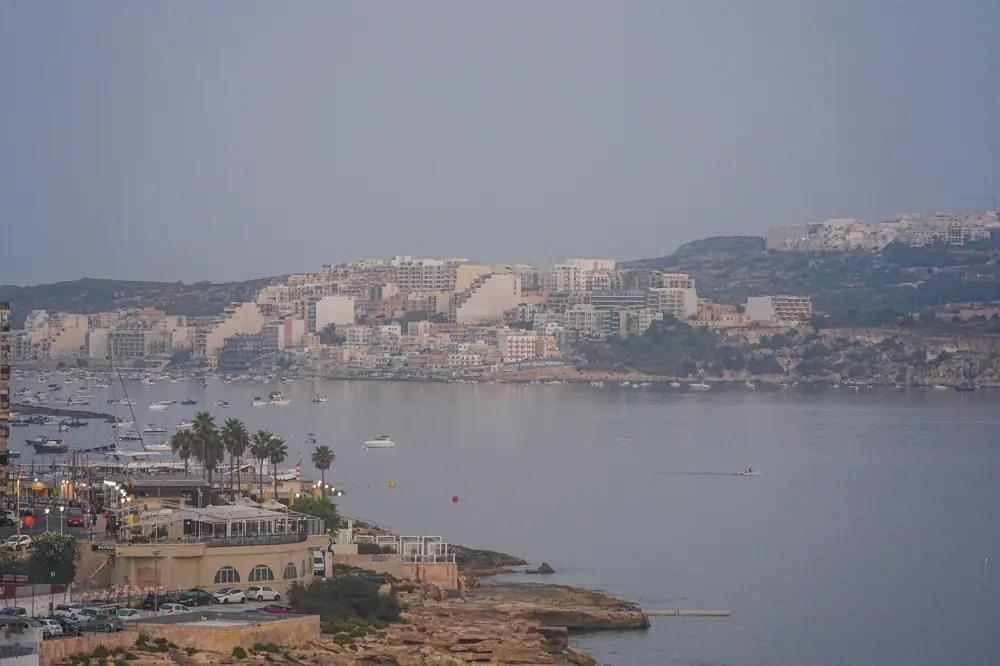
Maltese timeshare inventory concentrates in St Paul Bay, Mellieha, and the northern resort belt — complexes serving the British market across a season that runs April through October. Developer pricing for standard weeks runs €10,000-18,000, with the small island market producing less presentation-economy pressure than the Spanish coast.
The resale market is thin but deeply discounted — weeks clearing at €1,500-5,000 at established properties. Maintenance runs €400-650 annually, and the EU Timeshare Directive protections govern contracts with the 14-day cooling-off period standard.
As a working planning number for Malta in 2026, the typical range sits at €1,280–€15,300 — with the categories and scenarios below explaining what moves a specific case up or down that range.
Key Categories and Options
The main approaches and how they compare on cost, convenience and use case:
| Category / Type | Description | Common Use Case | Cost / Effort Level |
|---|---|---|---|
| Resale week | Thin secondary inventory at deep discounts — the smallest European market. | Value-focused Malta loyalists | €1,500-5,000 |
| Developer week | Direct purchase at the northern belt complexes. | Package converts | €10,000-18,000 |
| Season structure | April-October band with July-August peak — the swim calendar. | Summer families | Season-dependent |
| Exchange access | RCI and Interval networks carrying Maltese inventory. | Island rotators | Club-based |
The right choice depends on the scenario that matches your travel pattern — the three below cover the situations most travelers actually face.
Three Realistic Scenarios
The every-summer British family
A family returning to the same Mellieha complex each summer.
- Resale week purchase — €1,280–€3,400
- Annual maintenance EUR — €380–€530
- Summer hotel week equivalent — €1,100–€1,780
- Annual margin — €580–€1,230
Why this matters: The lowest entry price in Europe recovers in 2-3 summers — the small-market discount working in the buyer favor.
The shoulder couple
A retired couple booking May and October.
- Resale week purchase — €1,280–€2,980
- Maintenance EUR annually — €340–€510
- Shoulder hotel week — €720–€1,190
- Annual margin — €210–€680
Why this matters: The shoulder margin is thinner but real — the flexible calendar captures it without peak-week pressure.
The developer buyer
A couple buying at €14,000 direct.
- Developer week — €9,350–€15,300
- Resale exit value — €1,280–€3,400
- Channel premium — €7,650–€12,750
- Cooling-off available — 14 days EU
Why this matters: The premium is the largest percentage gap in Europe — the thin market makes the channel choice matter even more here.
The scenarios differ mainly in scope and commitment level — the same decision logic applies at every scale.
Sample Budget Breakdown
The table below shows how a typical mid-range budget for malta timeshare resort weeks cost mediterranean europe distributes across the main cost lines. Adjust the percentages to your own plans before using it as a savings target.
| Category | Estimated Amount | Explanation | Optimization Tip |
|---|---|---|---|
| Week purchase (resale) | €1,280–€4,250 | The lowest European entry prices at established properties. | Verify the complex annual fee history |
| Annual maintenance EUR | €340–€550 | The euro obligation paid every year regardless of travel. | Model the 10-year fee trajectory |
| Summer benchmark | €1,100–€1,780 | The peak-season hotel rates the owned week replaces. | Price the same complex, same dates |
| Cooling-off compliance | €0.0–€26 | The EU right that protects the developer channel. | Registered mail within 14 days |
Figures are indicative 2026 market ranges. Program terms, taxes and rates change — verify totals at the point of booking.
Practical Strategies to Control Costs
Cost control on malta timeshare resort weeks cost mediterranean europe is mostly about information habits. These are the strategies that consistently deliver the largest savings:
Buy the season tier you will actually use
Platinum and gold season tiers price 30-60% over silver and bronze at purchase and carry proportionally higher maintenance fees — the tier upgrade only pays when the travel calendar genuinely uses peak weeks.
Advantages:
- Delivers measurable savings on real bookings
- No special status or points balance required
Disadvantages:
- Requires honest assessment of school calendars and work constraints — the tier that flatters the imagination costs for decades.
- Requires habits the casual traveler may not maintain
Verify the deed type and what it actually conveys
Deeded, right-to-use and club-points structures convey very different ownership and exit positions — the same purchase price buys a degradable asset in one structure and a terminating lease in another.
Advantages:
- Delivers measurable savings on real bookings
- No special status or points balance required
Disadvantages:
- Requires reading the purchase contract structure — the legal nuance the sales gloss summarizes away.
- Requires habits the casual traveler may not maintain
Check maintenance fee history before committing
Annual maintenance fees at established resorts have compounded 4-8% yearly at many properties — the fee that starts at $950 reaches $1,800-2,400 within 15 years. The history document the resale listing rarely volunteers.
Advantages:
- Delivers measurable savings on real bookings
- No special status or points balance required
Disadvantages:
- Requires requesting 5-10 year fee histories — the diligence that takes a week and protects decades.
- Requires habits the casual traveler may not maintain
Price the resale market before any developer visit
The same week at the same resort often lists at 40-90% below developer price on the resale market — the gap the presentation room never mentions. Resale weeks at established resorts routinely clear at $1,000-8,000 against $20,000-35,000 developer pricing for comparable units.
Advantages:
- Delivers measurable savings on real bookings
- No special status or points balance required
Disadvantages:
- Resale inventory varies by week and season tier — the exact week wanted may not be listed when wanted.
- Requires habits the casual traveler may not maintain
Common Risks and How to Avoid Them
Every booking pattern carries failure modes worth knowing before the money moves:
Resale liquidity is structurally weak
- The issue: The resale market for many weeks clears at deep discounts with months-long listing times — the exit problem built into the purchase price from day one.
- Why it happens: The asset that appraised at purchase price in the sales room prices at $1-3,000 on the open market..
- Prevention: Buy at resale prices or not at all — the liquidity discount is knowable before purchase, not after.
The presentation-room premium
- The issue: Developer pricing runs 40-90% above the resale market for comparable weeks — the same resort, the same unit class, the exchange rights intact.
- Why it happens: The premium buys first-owner perks and booking windows that rarely price at parity with the gap..
- Prevention: Walk out of every presentation with the paperwork — the statutory cooling-off window exists for exactly this moment.
Maintenance fees are the real purchase
- The issue: The $25,000 purchase amortizes over decades, but the maintenance fee compounds every year regardless of usage — fees rising 4-8% annually at established resorts turn the $950 initial fee into $1,800-2,400 within 15 years.
- Why it happens: The fee schedule outlives the buyer..
- Prevention: Request and read 10-year fee histories before any commitment — the resale listings that hide them are telling.
Financing terms quietly double the cost
- The issue: Developer financing at 12-17% APR on timeshare loans adds 40-90% to the total outlay over typical terms — the monthly payment presentation that prices the interest out of view..
- Why it happens: Developer financing at 12-17% APR on timeshare loans adds 40-90% to the total outlay over typical terms — the monthly payment presentation that prices the interest out of view..
- Prevention: Secure outside financing or pay cash — the developer loan structure prices the emotional close, not the asset.
Best Practices and Ongoing Habits
The recurring habits that keep costs controlled between trips:
| Habit | Frequency | Cost | Why It Matters |
|---|---|---|---|
| Rescission deadline calendaring | Every new purchase | Free | The 3-10 day window that reverses everything. |
| Resale market scan before any developer visit | Every purchase consideration | Free | The 40-90% price gap the presentation room omits. |
| 10-year maintenance fee history review | Every purchase consideration | Free | The compounding obligation the listing hides. |
| Contract structure review before signature | Every purchase | Free-500 | The deed type and exit rights that decide the endgame. |
These habits compound: the travelers who run them pay measurably less over years, not because of tricks, but because the information asymmetry runs their way.
Frequently Asked Questions
Can I cancel a timeshare purchase after signing?
Yes — statutory rescission windows run 3-10 days depending on jurisdiction, delivered typically by certified mail. After the window, cancellation requires exit strategies with real costs and uncertain outcomes.
How much does a timeshare cost to buy?
Developer prices for a standard week run $20,000-35,000 with premium resorts reaching $60,000+; resale weeks at comparable properties clear at $1,000-8,000. The purchase price is the opening number — maintenance fees, closing costs and any financing determine the real total.
Is buying a timeshare worth it?
For travelers who return to the same resort in peak weeks every year and pay cash at resale prices, the arithmetic can work. For flexible travelers, the cash-and-save alternative usually accumulates more value — the honest comparison depends on usage discipline, not the property.
What is the difference between deeded and right-to-use timeshares?
Deeded interests convey an ownership stake in the real property that can be sold, transferred or inherited; right-to-use contracts convey usage rights for a fixed term that expires back to the developer. The structures differ materially in exit options and long-term value.
Summary
Planning malta timeshare resort weeks cost mediterranean europe in Malta starts with the honest range — €1,280–€15,300 for the scenarios most travelers actually book — then works backwards through the low resale entry, euro maintenance against summer rates, and the island loyalty the structure needs.
Malta prices the smallest and cheapest ownership market on the Mediterranean — the every-summer loyalist wins from the smallest entry cost. Verify current terms at the point of booking, price totals rather than headline rates, and let the comparison habits compound across every trip. Those three practices protect more budget than any single program choice.